Drips Along A Purlin Line
Inside The Building
Water spots line up in rows across the floor or on stored pallets after a hard rain.
On The Roof
Screws along that purlin have backed out or their washers have cracked, so each hole lets water through.

As a Columbus metal roof coating contractor, we seal screws, laps, and rust on steel roofs, then coat them while work inside keeps going.
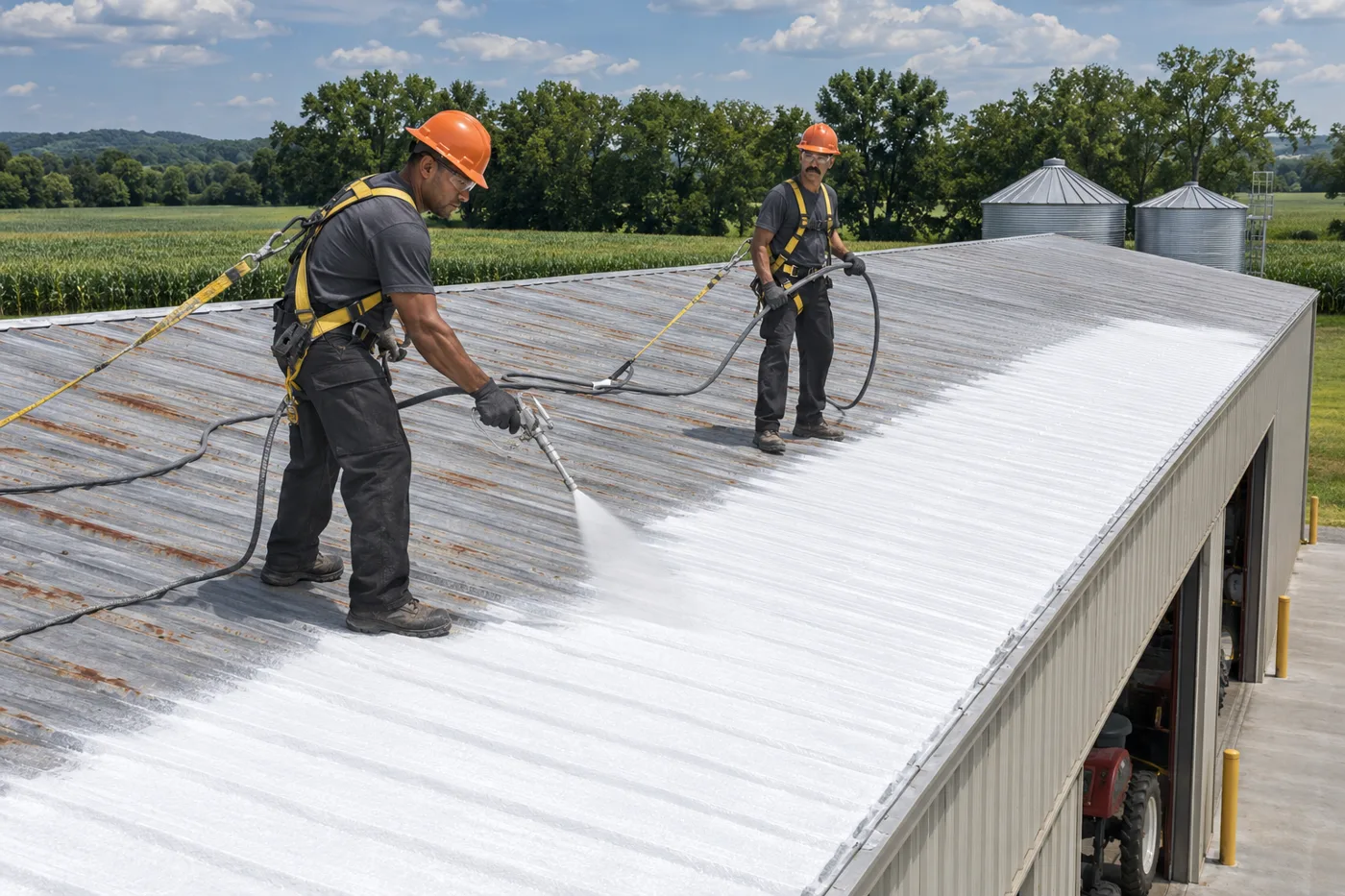
Columbus metal roof coating jobs usually begin with a drip, a stain, or a rust streak indoors. Each sign below points to a spot on the roof.
Water spots line up in rows across the floor or on stored pallets after a hard rain.
Screws along that purlin have backed out or their washers have cracked, so each hole lets water through.
Orange streaks run down the inside face of the walls just below the eave.
Bottom panel ends sit in gutter water, and rust has started at the cut edge where the panel meets the gutter.
Droplets fall on cold mornings even when it has been dry for days.
Warm, damp air from inside hits bare steel and condenses. Spray foam over the panels keeps the steel warmer and stops it.
A ring of wet ceiling tile or a dark spot sits right under a fan or vent.
Old caulk at the curb has split, and residue blowing out of the fan keeps new sealant from sticking.
Gray light shows around a skylight panel, and water follows the same path down.
Screws at the clear panel have cracked the brittle plastic, and the side laps beside it have opened.
Every job follows the same visit sequence, and the roof walk always comes first.
We walk every section, mark problems on a roof sketch, and photograph each one. You get a written scope that lists repairs apart from the coating.
Loose screws get driven tight, stripped holes get larger screws, and open laps get stitch screws. Panels rusted through get swapped before any coating.
Pressure washing strips chalk and dirt off the panels. Rust is brushed down to firm steel and primed, and laps and curbs get fabric set in base coat.
Base coat covers the sealed details first, then the field, then the topcoat at the planned thickness. A wet-mil gauge checks each pass.
Before we pack up, you walk the finished roof with us. The record lists products, thickness readings, and every repair made.
Five systems cover the steel, flat, foam, and shingle roofs we see around town. Each card lists what has to be true before it goes on.
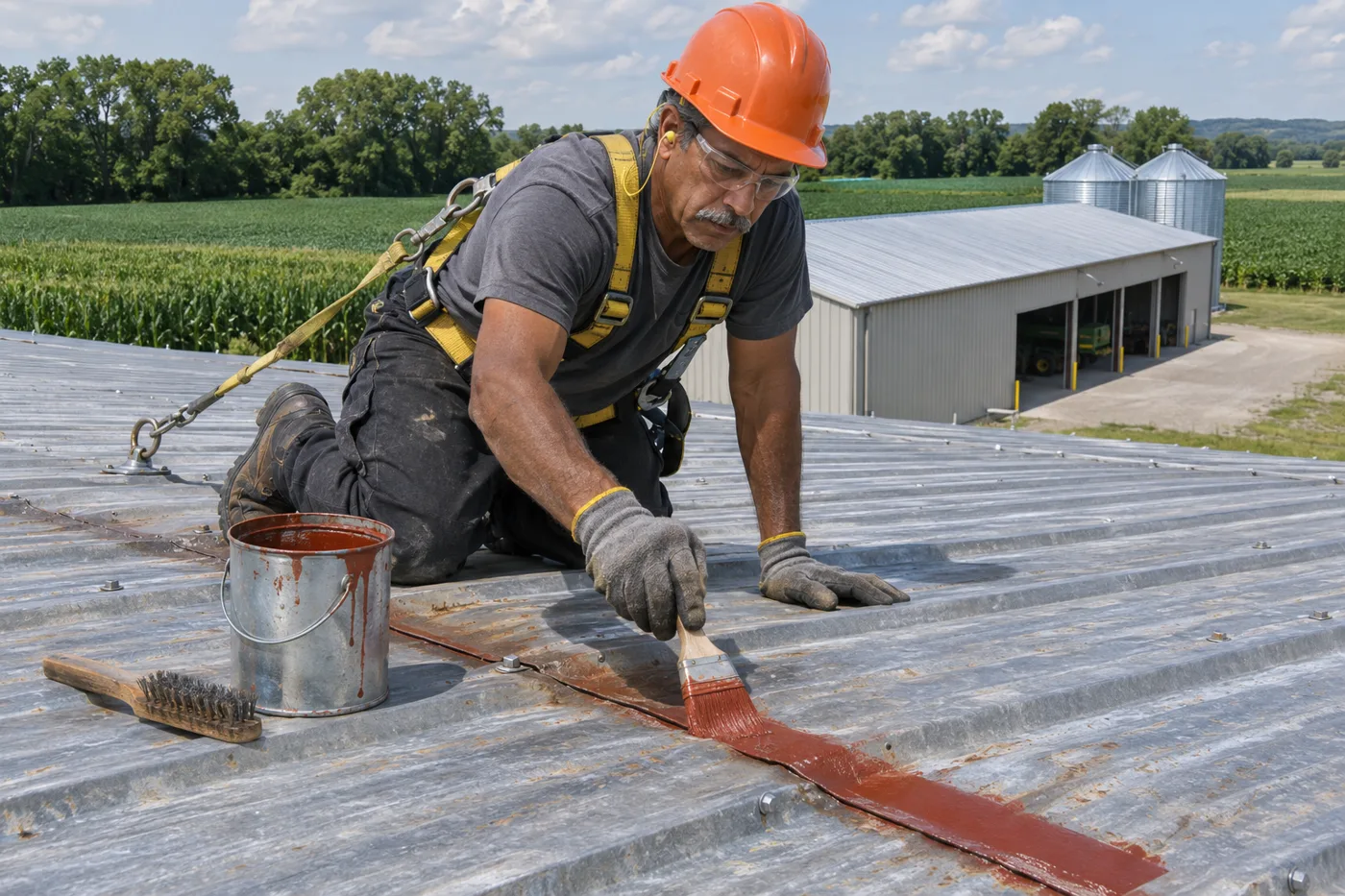
Full restoration for exposed-fastener and standing-seam steel with worn paint, surface rust, and leaking screws.

A thick, sun-resistant film for low-slope steel and flat sections where rain lingers after storms.
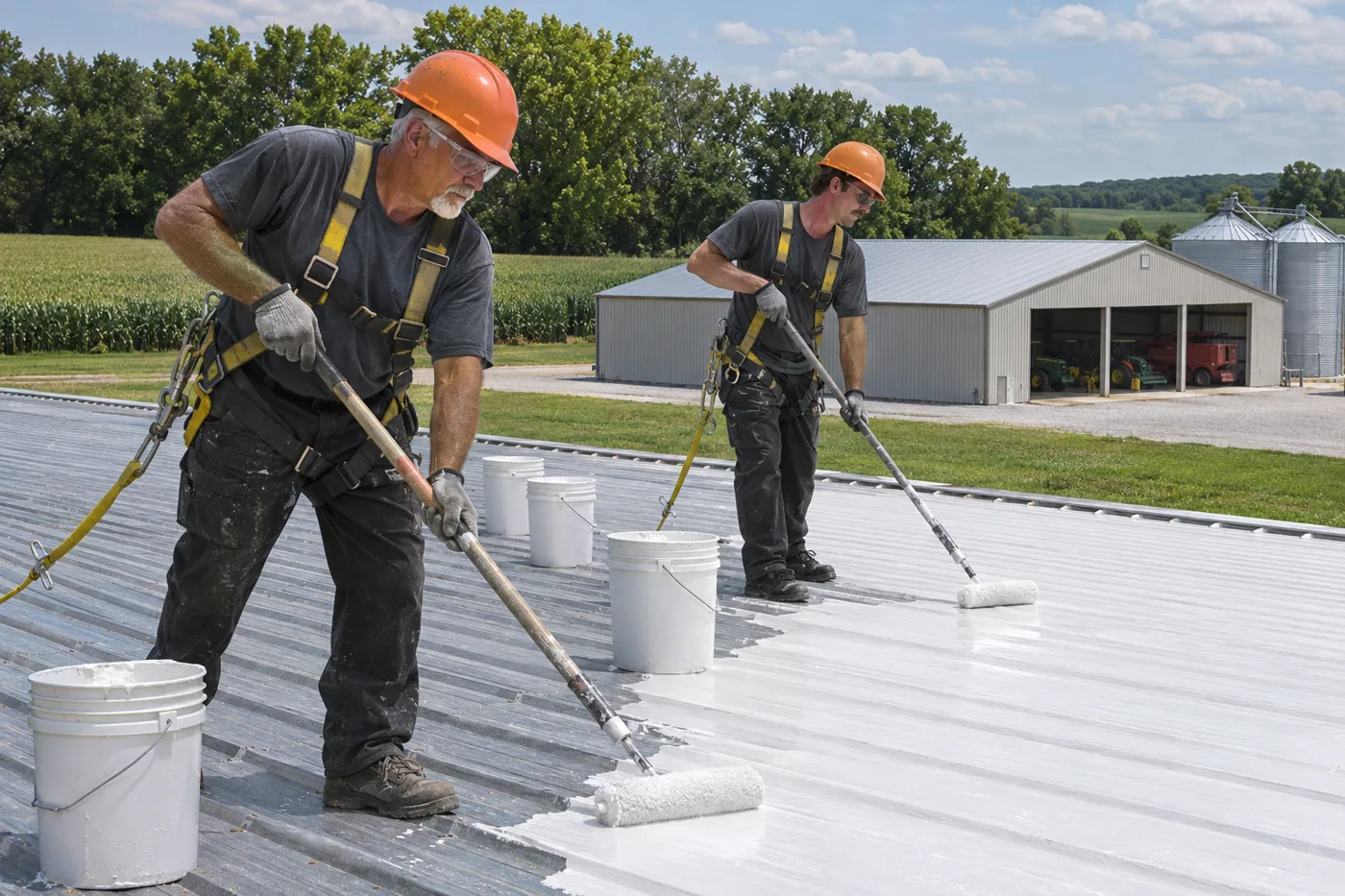
A water-based finish for pitched panels that shed rain fast, applied in warm, dry weather.
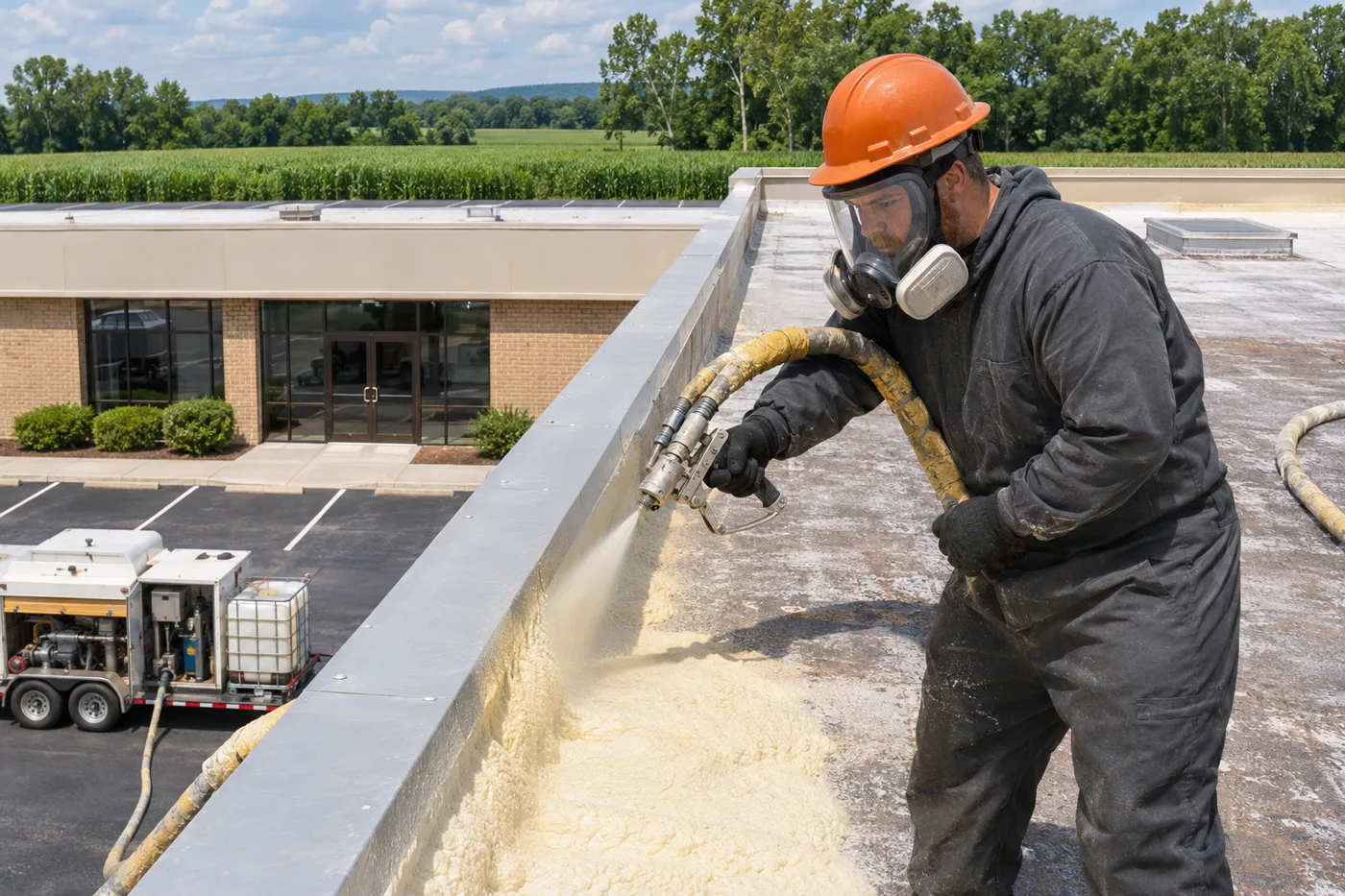
Closed-cell foam fills the ribs, adds insulation, and gets a protective topcoat over it.
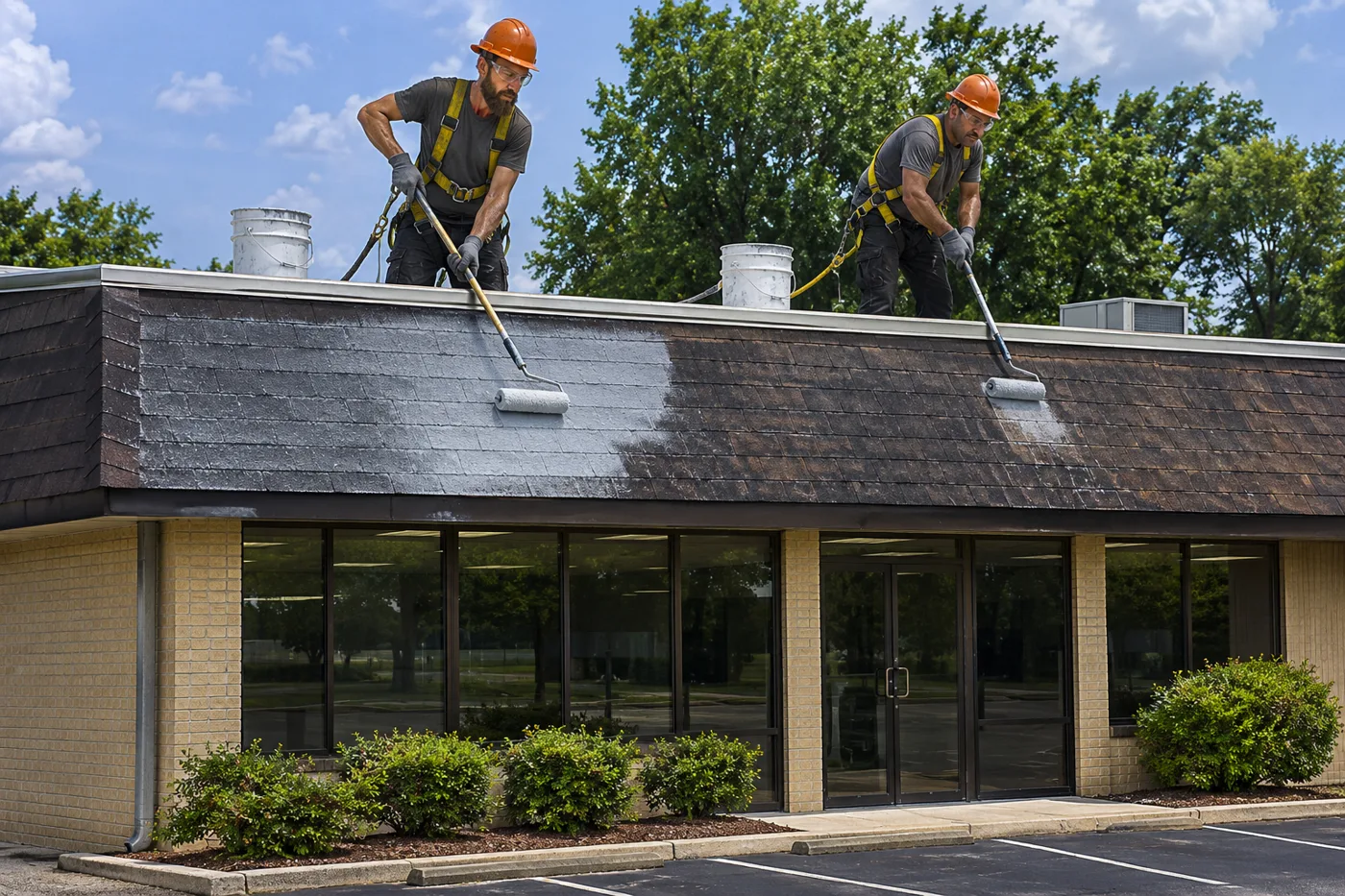
A breathable coating for asphalt shingle roofs on offices, churches, and small commercial buildings.
Start the ballpark estimate or call. Having a few details close by lets the first conversation cover both the roof and the building.
Most steel roofs we walk can be coated. These rows show where coating fits and where new panels make more sense.
Coating pays off on the building types below, where tearing a roof off would stop the work going on inside.
Screw heads, side laps, and curb corners end up under one continuous film once they are repaired.
A white or light topcoat reflects sun off panels that would otherwise heat the space below.
Primer and coating keep water off bare steel at laps, eaves, and cut panel edges.
When the topcoat wears thin years later, the roof takes a fresh coat over a washed surface.
Not sure your building falls inside our area? Call us or send us a message. We coat commercial metal roofs in Columbus, Seymour, Greensburg, Madison, Batesville, and North Vernon.
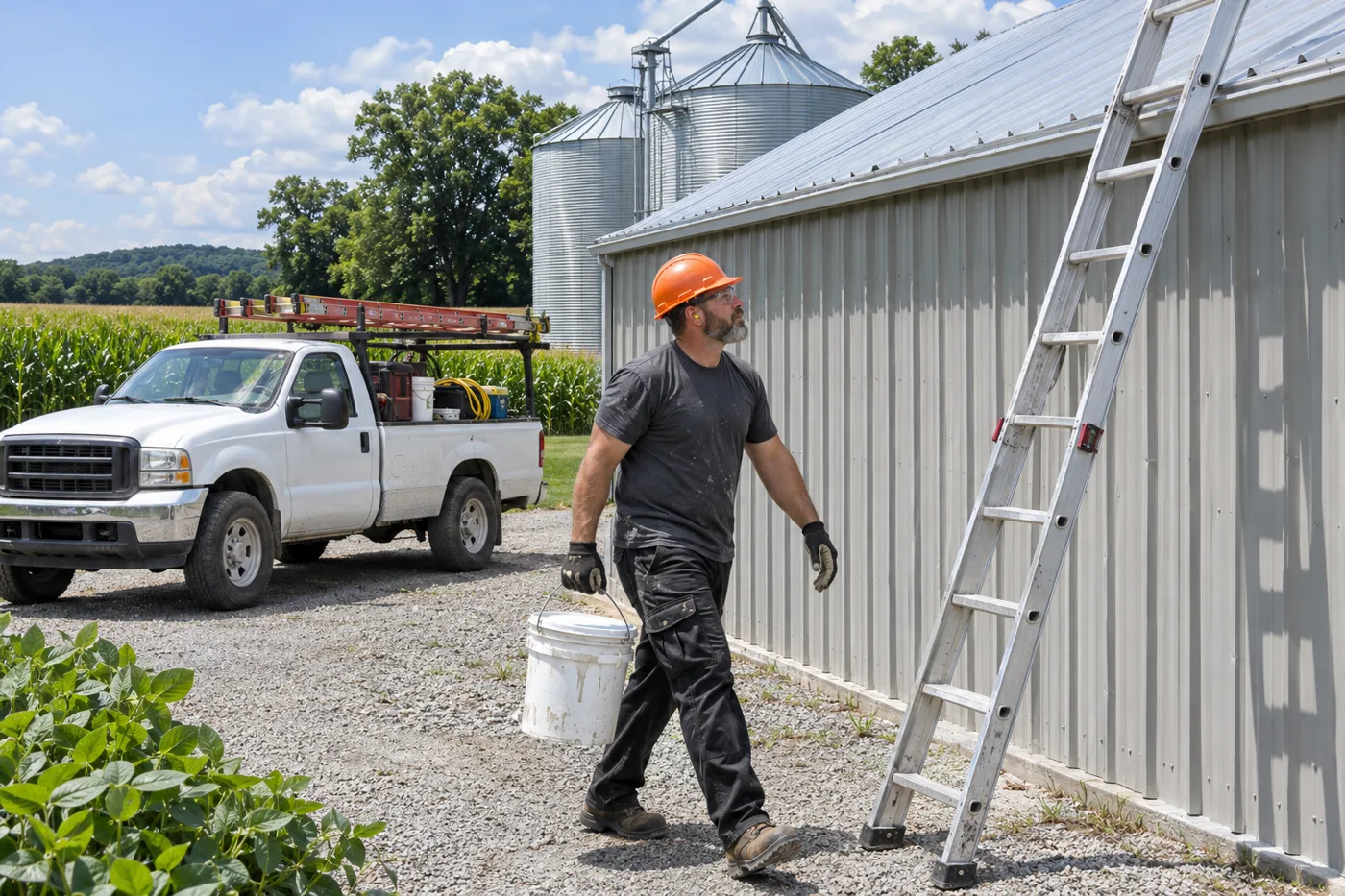
Warehouse and plant roofs, plus dated photo checks after hail.
Shop roofs with rows of translucent skylight panels.
Roofs where dew, fog, and cool nights set the coating hours.
Plant roofs with exhaust residue, degreased before any coating.
Long metal buildings where gutters and eaves set drainage.
Short answers to what owners ask us before a roof walk.
It pays off when the steel is still firm and the leaks come from screws, laps, and surface rust. Those get sealed and coated in place while tenants keep working. Panels rusted through across wide areas get replaced instead, and the written scope says so plainly.
The eaves and the bottom of each panel get extra time, because dust, feed, and gutter water start rust there first. Those ends are wire-brushed and primed, loose screws are replaced, and big doors stay usable while the roof is coated.
Rub the surface. Chalky residue on your hand, thin spots where primer or bare steel shows, and rust coming back at laps all mean a recoat is close. A walk every few years and after hail catches those early, and the recoat is a wash, touch-up, and one fresh topcoat.
Our published range runs about $2.50 to $4.00 per square foot to coat, against about $5 to $8 to replace. Roof size, rust treatment, screw and lap repairs, the coating system, thickness, and lift access set where a building lands. The roof walk sets the final number.
Yes. Coating goes on from above, so production continues underneath. We split the roof into sections, wash process residue off first, and plan spray work near exhaust stacks and intakes with the plant safety staff so fumes stay outside.
Building permits and inspections in Columbus run through the Bartholomew County Department of Technical Code Enforcement, so check there whether your coating scope needs one. Commercial work across the state follows the Indiana Building Code, 675 IAC 13.
Send the roof size and how the building is used, and we will walk the roof and price the full coating system.